


An actuator on a valve automates the control of fluid flow in industrial processes, improving efficiency and safety. This article covers types of valve actuators, their applications, and key factors to consider when choosing the right one for your needs.
Key Takeaways
- Valve actuators are essential for automating industrial processes, enabling precise control over fluid movement in various environments.
- There are four main types of valve actuators—pneumatic, hydraulic, electric, and manual—each catering to specific operational needs and environments.
Understanding Valve Actuators
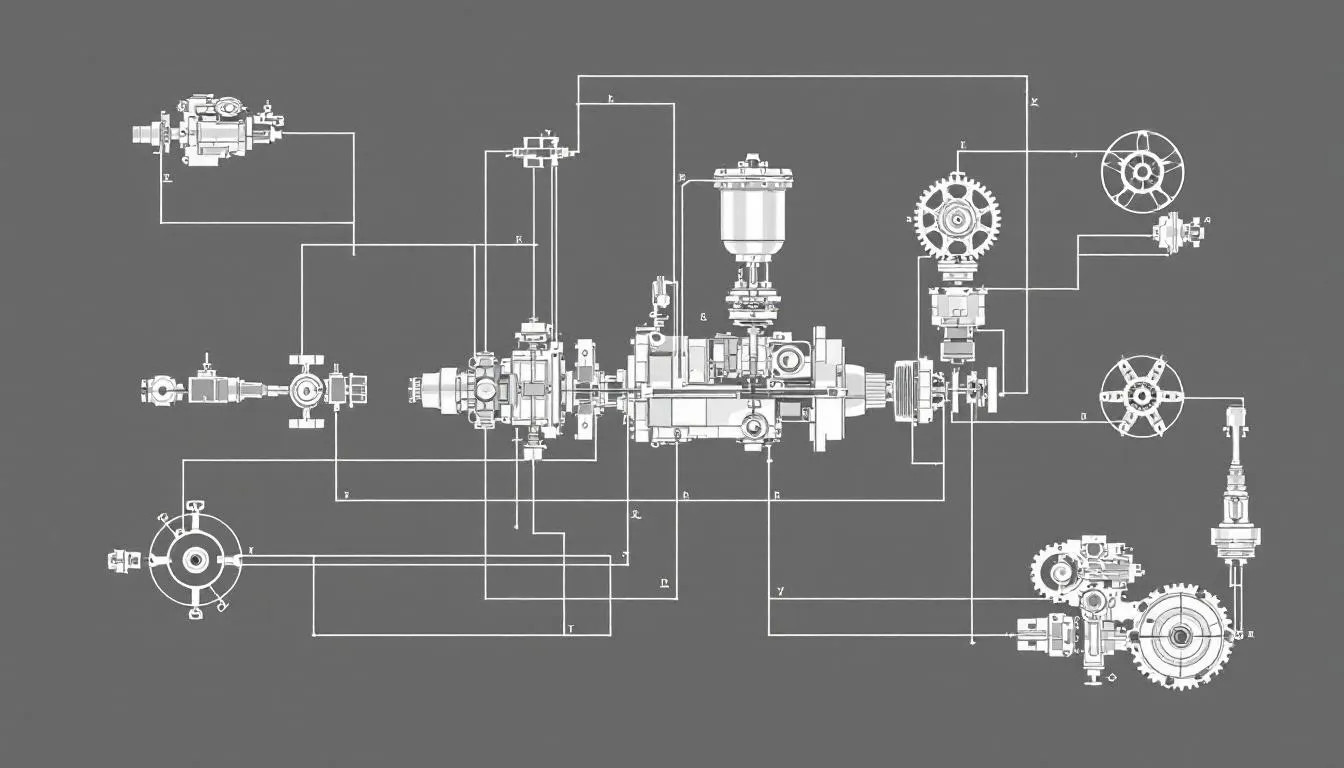
A valve actuator is a mechanical device to move or regulate a control valve. These devices reduce the need for manual control by enabling remote operation, which is crucial in hazardous or hard-to-reach environments.
This automation is vital for industries that require real-time adjustments and precise control over fluid movement, such as chemical processing and wastewater treatment.
Types of Valve Actuators
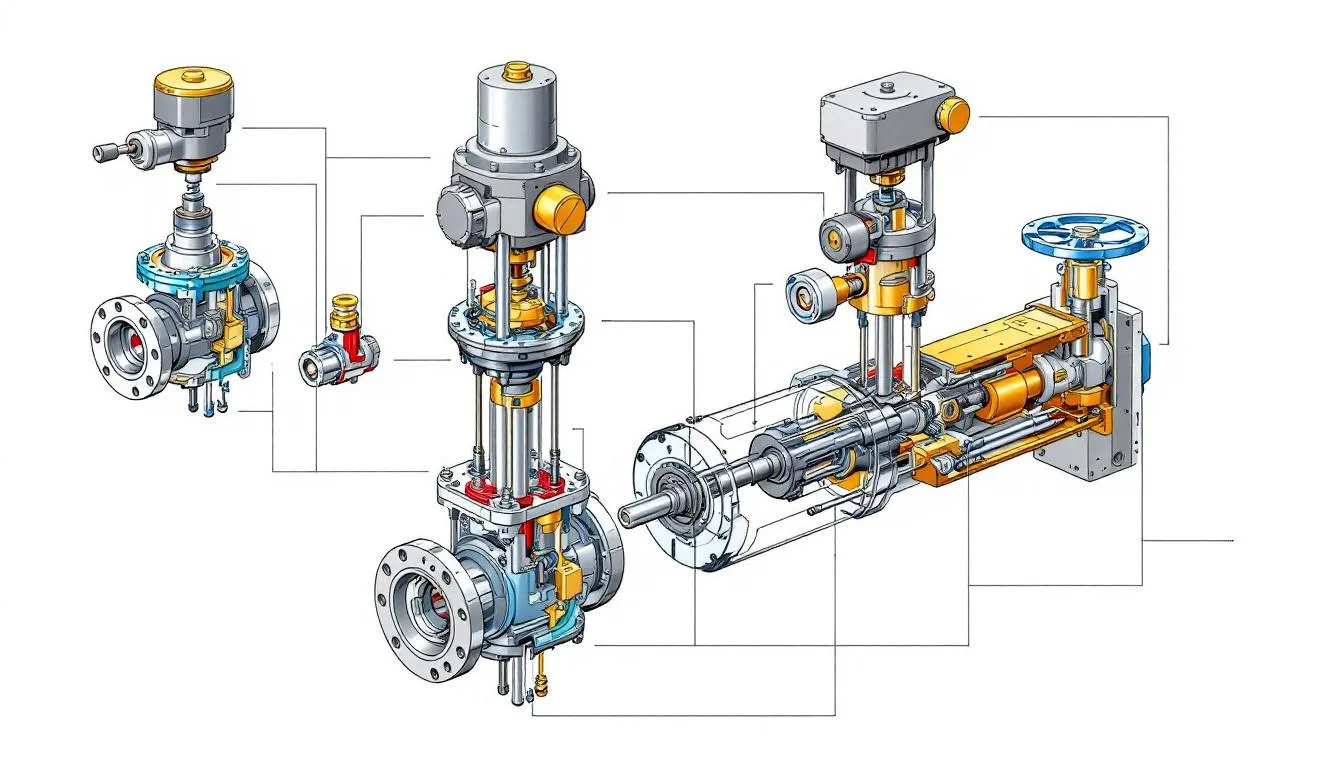
Valve actuators come in various forms, each tailored to specific applications and operational environments. The primary valve actuator types include:
- Pneumatic valve actuators: use compressed air to generate mechanical motion.
- Electric valve actuators: rely on electricity for linear or rotary movements.
- Hydraulic valve actuators: utilize pressurized fluids to deliver high force and precision.
Pneumatic Actuators
Pneumatic actuators are renowned for their speed and efficiency, making them ideal for high-speed applications.
These actuators use compressed air as their power source, converting air pressure into mechanical motion to control valves. Typically, the pressure within pneumatic systems is managed between 80 and 100 PSI to ensure effective operation.
Pneumatic actuators deliver top performance in tough conditions. These systems work great in harsh environments and give you fast response times.
Key benefits include:
- Durability – Built to handle extreme conditions without breaking down
- Fast cycling – Operates at high speeds for rapid industrial processes
- Quick response – Reacts instantly when you need immediate action
- Safety features – Includes explosion-proof housing for dangerous work areas
- Reliability – Keeps working when other systems fail
Electric Actuators
Electric actuators use electricity to produce linear or rotary motion, making them suitable for a wide range of applications, including industrial automation, water treatment, and electric power generation.
These most electric actuators are favored for their low noise levels and energy efficiency, as they can hold valve positions without requiring additional energy when powered continuously.
Protection ratings like NEMA and IP standards make electric actuators durable across various environments. Modern units integrate seamlessly with industrial systems through these advanced features:
- Limit switches – automatic position control and safety
- Manual handwheels – emergency operation during power failures
- Fieldbus interfaces – direct integration with control networks


Hydraulic Actuators
Hydraulic actuators deliver the power you need for high-force applications. These systems use pressurized fluid to create force up to 10,000 PSI, making them perfect for heavy-duty work. However, maintenance costs can reach 15-20% more than electric alternatives.
Key features include:
• Force output: 2-5 times stronger than pneumatic systems
• Precision control: ±0.1mm accuracy possible
• Operating pressure: 1,000-5,000 PSI typical range
Manufacturing industries choose hydraulic actuators when they need serious power and control. Construction, heavy machinery, and production facilities use these systems daily because they handle massive loads with pinpoint accuracy. Fluid flow regulation stays consistent even under extreme pressure conditions.
Primary applications include:
• Construction equipment: Excavators generating 40+ tons of force
• Manufacturing presses: Operating at 3,000+ PSI consistently
• Heavy machinery: Lifting capacities exceeding 100 tons
Key Components of Valve Actuators
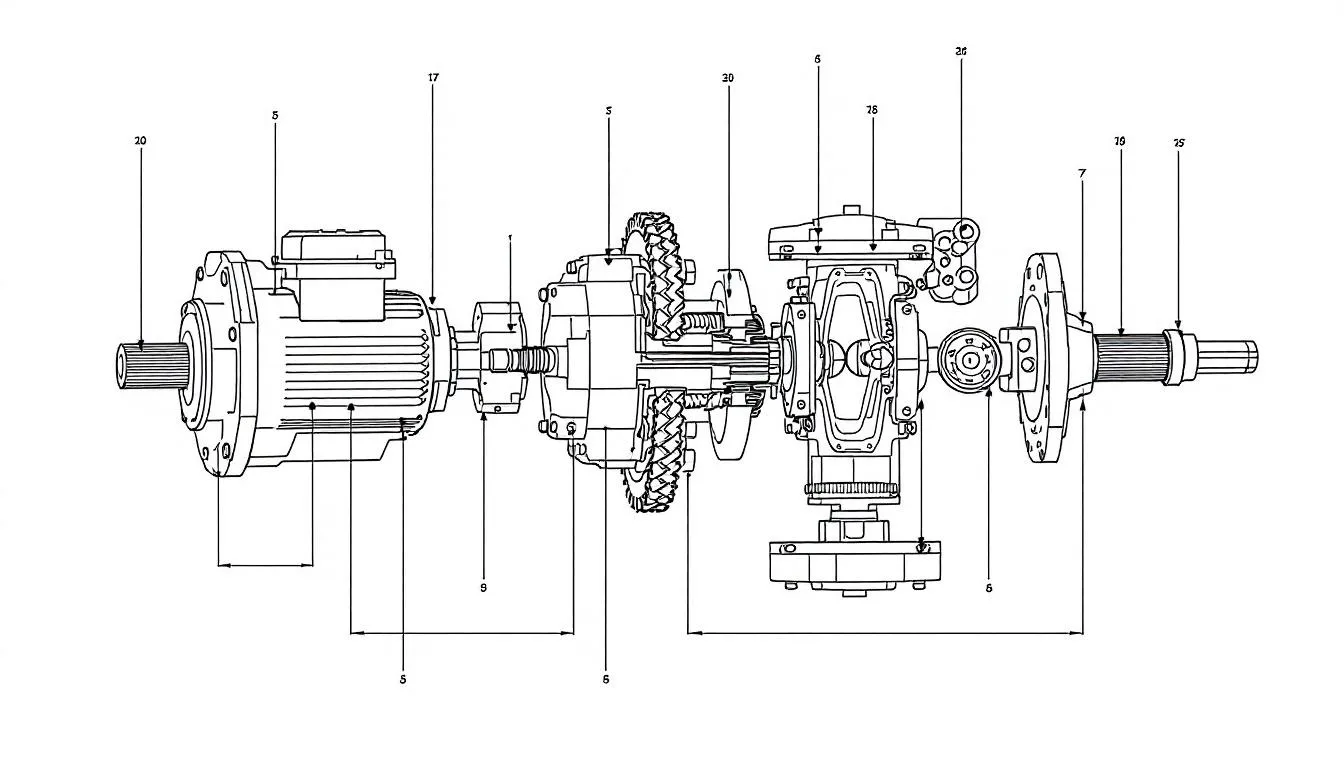
Valve actuators comprise several key components that ensure their efficient and precise operation. Including limit switches, torque sensors, manual overrites, electric motor, springs, gearbox and position sensors:
| Component | Function | Importance |
|---|---|---|
| Limit Switches | Detect valve position limits to prevent over-travel | Ensures accurate valve positioning and safety |
| Torque Sensors | Measure torque applied to the valve | Monitors actuator load and prevents damage |
| Manual Overrides | Allow manual valve operation during power or system failure | Provides backup control for continuous operation |
| Electric Motor | Drives valve movement in electric actuators | Converts electrical energy into mechanical motion |
| Springs | Provide fail-safe return action in spring return actuators | Ensures valve moves to safe position on failure |
| Gearbox | Transmits and modifies torque and speed | Facilitates appropriate valve movement |
| Position Sensors | Provide feedback on valve position | Enables precise control and monitoring |
Linear vs Rotary Valve Actuators
Valve actuators come in two main types: linear and rotary. Each type works best for different jobs.
Linear actuators move in straight lines. They work well for throttling jobs. These jobs need small changes to valve positions. This gives you control.
Rotary actuators are simpler to build. They work faster than linear types. Use them for Butterfly valves, Ball valves, etc.
Understanding these differences helps in selecting the most suitable actuator type based on specific operational needs.
| Feature | Linear Actuators | Rotary Actuators |
|---|---|---|
| Motion Type | Straight-line (linear) motion | Rotational motion |
| Typical Applications | Throttling applications requiring precise incremental adjustments | Applications requiring fast and precise control of flow rates |
| Common Valve Types | Gate valves, globe valves | Butterfly valves, ball valves |
| Design Complexity | More complex due to linear motion mechanism | Simpler design, often more compact |
| Installation Space | Requires more space due to linear travel | Requires less space, suitable for compact setups |
| Speed of Operation | Generally slower | Generally faster |
| Flexibility | Primarily linear motion | Can provide both rotary and linear motion with reversing motors |
| Control Precision | High precision for flow regulation | High precision for flow control |
Summary
In summary, selecting the best valve actuator requires understanding the types available and their key components. Consider the specific operational needs and environmental conditions..
Follow best practices and manufacturer guidelines to avoid costly downtime and repairs. The right valve actuator improves performance and safety in industrial processes.
Frequently Asked Questions
Valve actuators are widely utilized in industries including oil and gas, water treatment, power generation, and maritime operations to automate and control fluid flow processes efficiently. Their implementation significantly enhances operational efficiency and safety in these sectors.
How do spring return actuators enhance safety?
Spring return actuators use a mechanical spring to return the valve to a default safe position, such as fully open or closed, during power or air supply failures. This fail-safe feature is critical in emergency situations to prevent accidents or equipment damage.
What factors influence the choice between linear and rotary actuators?
The selection depends on the valve type and application requirements. Linear actuators provide precise control for valves requiring straight-line motion, like globe or gate valves, while rotary actuators are suited for quarter turn valves such as ball or butterfly valves that require rotational movement.
Can valve actuators be manually operated in case of power failure?
Yes, most valve actuators include manual overrides like handwheels or levers, allowing operators to control valve positions during power outages or system failures, ensuring continued operation and safety.
How does hydraulic pressure affect hydraulic actuators?
Hydraulic actuators convert hydraulic pressure from hydraulic fluid into mechanical force, enabling them to handle high-force applications with precision. The pressure level directly impacts the actuator’s force output and responsiveness.
What role do limit switches play in valve actuators?
Limit switches detect the valve’s position limits, preventing over-travel and potential damage. They provide feedback to control systems, ensuring accurate valve positioning and enhancing operational safety.


